
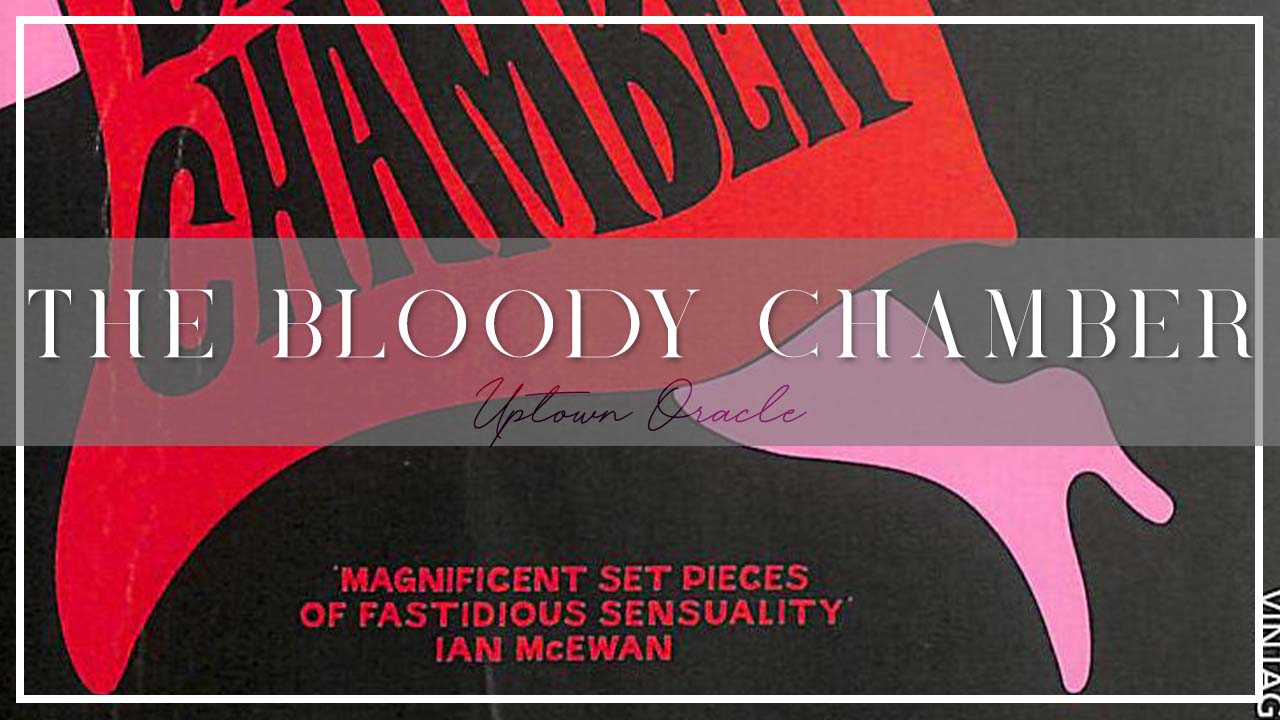
Fairy tales have always been darker than many of us remember. Long before Disney softened their edges, these stories were filled with violence, desire, betrayal, and death. Angela Carter’s The Bloody Chamber embraces those darker roots, retelling familiar tales through a feminist Gothic lens that is sensual, unsettling, and richly symbolic.
Originally published in 1979, this celebrated collection reimagines stories like Bluebeard, Beauty and the Beast, Little Red Riding Hood, Snow White, and Puss in Boots, exploring female agency, sexuality, transformation, and power. Some stories remain close to their inspirations, while others become almost unrecognisable beneath Carter’s lush prose and Gothic imagination.
As with any short story collection, some tales resonated more than others but when Carter is at her best, she creates some of the most memorable fairy tale retellings ever written.


(Affiliate Links)
Angela Carter’s feminist retelling of fairytales—masterful, seductive and luminous.
From familiar fairytales and legends—Red Riding Hood, Bluebeard, Puss in Boots, Beauty and the Beast, vampires and werewolves—Angela Carter has created an absorbing collection of dark, sensual, fantastic stories.
The Bloody Chamber
The unnamed young bride begins the story utterly captivated by her wealthy new husband, believing she has entered a glamorous new life. It gradually becomes clear that she has instead entered a prison, isolated within a vast castle and trapped by a man whose charm masks something deeply sinister.
Her husband is a wonderfully unsettling Bluebeard figure. From the beginning there’s something unsettling beneath his sophistication, and Carter slowly peels away that façade as the story progresses.
The true hero, however, is the bride’s mother. Rather than waiting for rescue, Carter gives us one of the most satisfying reversals of the original fairy tale, allowing maternal love and courage to save the day.
A retelling of Bluebeard, this is arguably the strongest story in the collection which is likely why it’s the titular story. The tension builds masterfully as curiosity, fear, and desire intertwine before culminating in a genuinely thrilling climax. It perfectly encapsulates everything Carter is trying to achieve throughout the collection.
The Courtship of Mr Lyon
The familiar trio of Beauty, her loving father, and the mysterious Mr Lyon are all present, though Carter gives each slightly more emotional nuance than the traditional tale. A relatively faithful retelling of Beauty and the Beast, this story feels gentler than many others in the collection. While beautifully written, it serves almost as a bridge before Carter’s darker reinterpretation in the following story…
The Tiger’s Bride
Here, Beauty becomes a much more cynical and guarded protagonist after her father literally gambles her away in a card game. The father is difficult to sympathise with, while the Beast himself becomes both frightening and strangely compelling.
One particularly striking idea is that beauty itself becomes commodified, seen as interchangeable with a beautifully crafted mechanical maid. This darker Beauty and the Beast retelling pushes much further into themes of transformation, desire, and identity than The Courtship of Mr Lyon. It’s one of Carter’s boldest reinterpretations.
Puss-in-Boots
Puss steals the show. Quick-witted, mischievous, and endlessly entertaining, he schemes alongside his feline counterpart to help his lovestruck master win the married woman he’s fallen for. While humorous, this was probably my least favourite story in the collection. It feels noticeably longer than many of the others, and the joke begins to wear thin before the ending arrives.
The Erl-King
The mysterious Erl-King is one of Carter’s most haunting creations as a seductive, dangerous figure deeply entwined with the forest itself. This feels less like a traditional fairy tale retelling and more like an original Gothic myth. The atmosphere is extraordinary, with nature becoming both beautiful and deeply threatening.
The Snow Child
The Count, Countess, and magically created Snow Child exist almost as symbols rather than fully developed characters. Perhaps the shortest story in the collection, yet one of the most shocking. Carter transforms Snow White into a brutal exploration of male desire, innocence, possession, and death. It’s uncomfortable by design and impossible to forget.
The Lady of the House of Love
The lonely vampire Countess is one of the collection’s most tragic figures. Rather than presenting a monstrous predator, Carter creates someone trapped by her own nature, longing for something beyond blood and destiny. A melancholic Gothic vampire tale that feels both romantic and inevitable. One of the strongest stories after the title novella.
The Werewolf
The young girl proves far more capable than traditional Little Red Riding Hood. A brutally concise retelling in which the wolf is revealed to be the grandmother herself. Short, violent, and surprisingly effective.
The Company of Wolves
Carter once again revisits Little Red Riding Hood, this time giving her heroine significantly more agency than in the traditional tale. Perhaps the definitive story in the collection exploring female sexuality, transformation, and power. Rather than fearing the wolf, Carter asks what happens when the girl refuses to become prey.
Angela Carter’s prose is unlike almost anything else I’ve read. It’s rich, lyrical, and Gothic. Every sentence feels carefully crafted, filled with vivid imagery, symbolism, and sensual language. The stories carry a constant undercurrent of sexuality and menace, often making familiar fairy tales feel entirely new. Some retellings remain recognisable, while others move so far beyond their original source material that only the names or central premise remain. This isn’t a collection you race through. It’s one to pick up and read over days.
Blood dominates the collection, not just literal bloodshed, but symbolic blood representing puberty, menstruation, virginity, sexuality, sacrifice, and transformation. There’s so much symbolism underneath Carter’s prose. Flowers repeatedly appear alongside blood, creating powerful imagery around beauty, innocence, and decay.
Power is another recurring theme. Nearly every story explores unequal relationships, whether between husbands and wives, parents and children, predators and prey, or humans and monsters. Disguise and transformation appear throughout as characters shed skins, reveal hidden identities, or become something entirely different. These transformations often represent the loss of innocence, but also liberation.
Perhaps most strikingly, Carter repeatedly links love and death. Romance is rarely safe in these stories. Instead, intimacy becomes dangerous, transformative, and frequently destructive.
The Bloody Chamber is essential reading for anyone interested in Gothic fiction or fairy tale retellings. However, readers expecting faithful adaptations should know that Carter is doing something much more literary. These stories use familiar fairy tales as starting points before exploring themes of sexuality, gender, violence, and power through richly symbolic prose. It’s a landmark collection that has influenced decades of modern fairy tale retellings for a reason.
The Bloody Chamber is a beautifully written, unsettling collection that transforms familiar fairy tales into something darker, stranger, and far more psychologically complex. Not every story landed equally for me, but specifically The Bloody Chamber, The Tiger’s Bride, The Lady of the House of Love, and The Company of Wolves are unforgettable.
Positives of The Bloody Chamber
- Stunning Gothic prose throughout
- Inventive and thought-provoking fairy tale retellings
- Rich symbolism and recurring imagery
- Excellent exploration of power, sexuality, and transformation
- Several genuinely unforgettable stories
Negatives of The Bloody Chamber
- Some stories are considerably stronger than others
- Dense, literary prose won’t suit every reader
- Puss-in-Boots outstays its welcome
- Readers expecting traditional retellings may be surprised by how experimental many stories become
The Bloody Chamber isn’t interested in making fairy tales more palatable, it restores their teeth ready for devouring. Angela Carter takes stories we’ve heard since childhood and strips them back to reveal the desires, fears, violence, and power struggles that have always existed beneath their surface. The result is a collection that’s haunting, provocative, and endlessly rewarding to analyse.
More than forty years after its publication, it’s easy to see why The Bloody Chamber remains one of the defining works of Gothic and feminist literature, even if some stories linger in the mind far longer than others.
If you enjoy content on Uptown Oracle consider supporting us:
Ko-fi | PayPal
The Bloody Chamber by Angela Carter 🩸 Dark, Gothic Fairy Tales That Transform the ClassicsThe Bloody Chamber | Uptown Oracle

Fairy tales have always been darker than many of us remember. Long before Disney softened their edges, these stories were filled with violence, desire, betrayal, and death. Angela Carter’s The Bloody Chamber embraces those darker roots, retelling familiar tales through a feminist Gothic lens that is sensual, unsettling, and richly symbolic.
URL: https://amzn.to/4vhiBcl
Author: Angela Carter
4.5
