
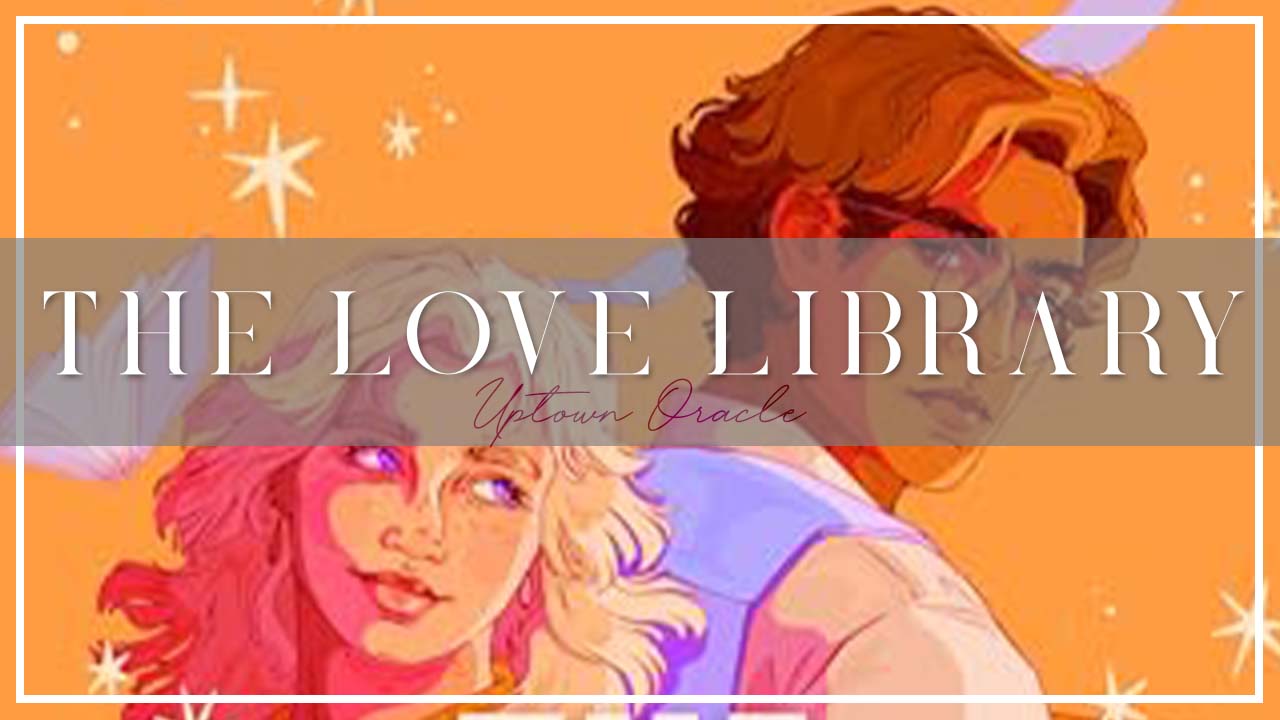
Most book lovers have, at some point, developed an entirely reasonable and not-at-all concerning attachment to a fictional character. The Love Library by Sarra Manning takes that familiar experience to its logical conclusion: what if you could pull your fictional boyfriend directly from the page and take him on an actual date?
It is a brilliantly bookish premise, blending contemporary romance with magical realism and literary chaos. Unfortunately, some fictional men belong firmly between the pages and several of the dates in this novel provide excellent evidence for keeping them there.
Fun, imaginative and incredibly easy to listen to, The Love Library offers a playful celebration of books and romantic fantasy. However, its central love story is obvious almost immediately, leaving much of the novel feeling like an entertaining but rather unnecessary detour towards an ending readers can predict from the opening chapters.


(Affiliate Links)
After a series of dating disasters, Tess Hardy wonders if she’ll ever find the man of her dreams – or if he only exists on the pages of her favourite novels. So when she’s invited to visit The Love Library, a 200-hundred-year-old institution which promises dates with her favourite romantic heroes in real life, Tess can’t resist!
But handsome head librarian Gabe Sharma seems grumpily determined to keep the library under lock and key. And as soon as Tess steps into the beautiful building crammed full of books, she realises why – it’s not just dust in the air… it’s magic. Here she really can grab drinks with Heathcliff, dine with Rochester and cosy up to her one true literary love, Darcy.
There’s just one Gabe. He’s determined to sabotage all of Tess’s dates! And why is it that she has more fun fighting with Gabe than flirting with any of her book-bound suitors…?
Tess Hardy is our entry point into the strange world of the Sharma Institute and its magical books. Initially approaching the Love Library as a professional writing assignment, she agrees to date a fictional character and document the experience for work. This gives her a sceptical but curious perspective, allowing readers to experience both the excitement and complete absurdity of meeting characters who should not exist outside their novels.
Tess is likeable and easy to follow, although her romantic obliviousness occasionally becomes frustrating. From very early in the book, it is apparent who she is actually interested in, making some of her continued fictional dating escapades feel less like exploration and more like deliberate avoidance.
Still, she works well as a romantic-comedy protagonist. Intelligent enough to recognise the problems with the Love Library while being emotionally messy enough to keep using it.
Gabe Sharma is half-owner of the magical library and the obvious real-world romantic interest. He is thoughtful, attractive and considerably more appealing than most of the fictional men Tess encounters. His connection with the library also gives him a sense of responsibility beyond the romance, as he is trying to protect something extraordinary while dealing with the practical realities of keeping it open.
The central problem is that Gabe is so clearly positioned as Tess’s eventual partner that the novel never generates much uncertainty around the outcome. He is right there. Tess plainly likes him. We plainly know she likes him. Everyone may as well start printing the wedding stationery. Their chemistry is enjoyable, but the predictability weakens the tension.
Ella, Gabe’s twin sister, is the true brains behind the Love Library operation. Newly a parent, severely sleep-deprived and still somehow capable of building an entire magical dating business, she is an absolute force. Her determination to save the library drives the plot, while her practical approach provides a fun contrast to the inherent ridiculousness of the service she has created.
Ella is one of the most entertaining characters in the novel. She understands how to package the fantasy readers want, even if the ethical and romantic implications of pulling sentient characters from books are perhaps not examined quite as thoroughly as they should be.
The Love Library itself is an excellent concept. The Sharma Institute contains magical books from which characters can physically be summoned. In an attempt to raise money and save the library, Ella transforms this ability into a dating service offering women the opportunity to meet their fictional crushes.
There is, admittedly, an immediate flaw in the fantasy. Many of these characters are beloved specifically because of their relationships with women inside their original novels. Removing them from those stories and expecting them to fall for entirely different readers raises some rather interesting questions about identity, free will and whether anyone has thought this business model through beyond “people will absolutely pay for it”.
Tess is persuaded to write an article documenting her dates. This leads to several entertaining encounters with literary men who prove questionable, inconvenient or deeply unattractive once removed from the narrative framing that made them romantic heroes. It is a clever way of examining the gap between fictional romance and reality. Traits that appear intense, brooding or passionate on the page can become controlling, strange or downright alarming when sitting opposite you at dinner.
The exception is Winnie-the-Pooh, whom I would also be delighted to meet. That one requires no justification.
The dates provide much of the novel’s comedy, but the central romantic trajectory is clear almost immediately. Tess and Gabe are plainly being positioned as the endgame, so watching her continue meeting fictional men occasionally becomes frustrating. The story is fun, but there is very little genuine romantic suspense.
Sarra Manning’s writing is light, conversational and easy to follow, making Love Library particularly well suited to audiobook. I listened to the novel and found it required relatively little concentration, which made it an ideal choice for commuting or completing other tasks. The dialogue moves quickly, the premise is explained clearly and the romantic-comedy beats are easy to enjoy without needing to memorise complicated world-building.
That said, the audiobook did unexpectedly enter full spice mode while I was crammed onto a packed Tube on the way home. Not a euphemism, although the timing did make the entire journey considerably more awkward.
The magical elements are handled casually rather than through an intricate system. The library’s abilities exist primarily to support the romantic premise, rather than becoming the subject of extensive rules or lore.
The novel’s strongest theme is the difference between loving a fictional character and actually having to interact with them. Readers experience characters through carefully constructed narratives. We understand their motivations, witness their private vulnerability and often overlook behaviour that would be rather less appealing in real life. By taking these men out of their books, Love Library exposes how dependent fictional attraction can be on context.
The dating service offers customers the chance to enter the fantasies they have constructed while reading. Yet the novel repeatedly suggests that escapism cannot replace genuine connection. Tess’s dates may be exciting or amusing, but they are performances built around characters who do not truly belong in her world.
The premise also raises interesting, although not always fully explored, questions about who owns fictional characters and whether they retain agency once removed from their narratives. The Love Library treats characters partly as people and partly as commercial products. This tension could have supported deeper exploration, but the novel largely prioritises comedy and romance.
Ultimately, Tess must decide whether she wants the polished fantasy of a fictional man or the unpredictability of a real relationship. The message is hardly subtle, but it suits the warm romantic-comedy tone.
Love Library is best described as a contemporary romantic comedy with magical realism. Despite characters literally being pulled from books, it is not a traditional fantasy novel. The magic is lightly explained and primarily exists to create humorous dates and support the romance.
Readers looking for a cosy, bookish love story with an unusual premise should find it enjoyable. Those expecting deeper exploration of the magical library or the ethical implications of fictional characters becoming real may be left wanting more.
The repeated Harry Potter references also felt unnecessary and increasingly distracting. Given how carefully the Sharma Institute appears to rely on works no longer restricted by copyright, the sheer number of references to that particular franchise felt odd. More importantly, continuing to treat Harry Potter as harmless shorthand for universal bookishness now feels badly out of step with the wider conversations surrounding the franchise and its creator. The mentions added very little and could easily have been replaced with references that felt more thoughtful.
The Love Library has a brilliant premise and delivers plenty of entertaining literary chaos. The fictional dates are often funny, the magical library is delightful and Ella Sharma deserves both a nap and control of the entire operation.
However, the romance is so predictable from the opening chapters that much of the story feels like it is delaying an inevitable conclusion. Tess’s dates remain amusing, but it becomes increasingly difficult to understand why she is pursuing fictional men when Gabe is standing directly in front of her wearing an enormous metaphorical sign reading “love interest”.
The audiobook was light and perfect for listening to but I would have liked the story to delve further into its magical and ethical questions. A fun bookish romance, even if the fictional boyfriends are generally better left on the shelf.
Positives of The Love Library
- Brilliant and original bookish premise
- Fun exploration of fictional crushes in the real world
- Ella is an entertaining and memorable supporting character
- Light, accessible writing that works well on audiobook
- Several genuinely funny and chaotic dates
- Winnie-the-Pooh remains flawless
Negatives of The Love Library
- The central romance is obvious almost immediately
- Tess’s continued fictional dates can feel frustrating
- The ethics and mechanics of summoning characters remain underexplored
- Some of the fictional encounters become repetitive
- Far too many unnecessary Harry Potter references
- The magical library is more interesting than parts of the romance
The Love Library understands the appeal of fictional men and also why meeting some of them would probably result in an emergency group chat and a conveniently timed escape call. Sarra Manning turns a fantastic premise into a light, funny and highly listenable romantic comedy. Although the final pairing is never remotely in doubt, the literary dates and magical-library setting provide enough charm to keep the journey enjoyable.
It may not have convinced me to abandon reality for a fictional boyfriend, but I would absolutely sign up for afternoon tea with Winnie-the-Pooh.
I received The Love Library by Sarra Manning from the publisher. This is an unbiased and honest review
If you enjoy content on Uptown Oracle consider supporting us:
Ko-fi | PayPal
The Love Library by Sarra Manning Review 💘 Magical Books, Fictional Boyfriends and a Predictable Romance | Uptown Oracle

Most book lovers have, at some point, developed an entirely reasonable and not-at-all concerning attachment to a fictional character. The Love Library by Sarra Manning takes that familiar experience to its logical conclusion: what if you could pull your fictional boyfriend directly from the page and take him on an actual date?
URL: https://link.amazon/B04TcmplH
Author: Sarra Manning
3.5

Leave a Reply